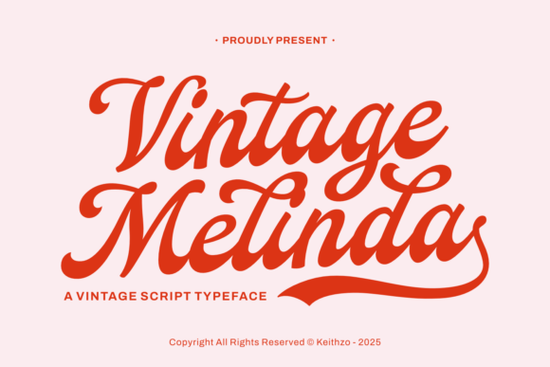
If you're looking for a script font that feels both personal and polished like something handwritten with care but refined enough for professional use you’ll likely enjoy Vintage Melinda Font. It’s not overly ornate or fussy, but it carries quiet confidence: soft curves, gentle contrast, and subtle swashes that flow without demanding attention. Designed with mid-century charm and traditional calligraphy in mind, it suits projects where warmth and authenticity matter more than flash.
What kind of projects does Vintage Melinda work best for?
This font shines in contexts where tone and feeling are as important as legibility. Think wedding stationery invitations, menus, or thank-you notes that should feel intimate, not generic. It’s also well-suited for boutique packaging (like small-batch candles or artisanal soaps), greeting cards with heartfelt messages, or even branding for cozy cafés, florists, or handmade goods shops.
Because it includes PUA encoding, all alternate characters, ligatures, and decorative elements are easy to access in design apps like Adobe Illustrator or Affinity Designer no need for special plugins or workarounds. You’ll find stylistic alternates, swash capitals, and connecting letters right where you expect them.
How does it compare to other popular script fonts?
Unlike some highly stylized scripts that lean into dramatic flourishes or ultra-thin hairlines, Vintage Melinda keeps things grounded. Its rhythm is relaxed but intentional similar in spirit to Samantha Handwriting Font, though with more structured spacing and stronger vintage cues. If you’ve used Coconut Mocha Font, you’ll notice Vintage Melinda has less contrast between thick and thin strokes, giving it a gentler, more consistent texture.
It’s less playful than Cutie Slime Duo Font and more refined than AnyTimes Font, making it a natural middle ground for designers who want personality without sacrificing readability at smaller sizes.
Is it beginner-friendly for crafters and small businesses?
Yes if you’re comfortable selecting fonts in Canva, Cricut Design Space, or Silhouette Studio, you’ll have no trouble using Vintage Melinda. The OpenType features (like automatic swashes and contextual alternates) work best in professional tools, but even the basic version looks great straight out of the box. Many users report success printing directly from Canva using the uploaded OTF file, especially for 5×7 or A6 greeting cards.
For print-on-demand sellers, this font pairs well with neutral backgrounds and natural textures think kraft paper, linen, or soft matte finishes. It doesn’t compete with imagery; instead, it complements photos of real moments: a first dance, a handwritten note, a shelf full of hand-poured candles.
Where does it fit in today’s design trends?
Rustic sophistication is still strong not the “shabby chic” of ten years ago, but a quieter, more intentional version. Think curated imperfection: slightly uneven baselines, organic line weight variation, and letterforms that suggest human touch without looking messy. Vintage Melinda fits neatly here. It avoids the overused “vintage diner” look while still nodding to mid-century lettering found on old perfume bottles, travel posters, or family recipe cards.
You’ll see similar sensibilities in high-end stationery brands and indie lifestyle magazines places where typography supports storytelling rather than shouting over it.
One thing to keep in mind before downloading
Vintage Melinda works best at medium to large sizes. While it’s readable down to ~14pt in print, avoid using it for body text or long paragraphs. Save it for headlines, quotes, names, or short phrases where its character can breathe. For supporting text, pair it with a clean sans-serif like Montserrat or Lato or even a subtle serif like Merriweather.
And if you’re curious about how it stacks up against other hand-drawn options, you might also explore Vintage Melinda alongside AnyTimes Font or Samantha Handwriting Font to compare spacing, x-height, and overall mood.
Before you start designing:
- Test it at your intended final size especially if printing on textured paper
- Check how swashes behave in your layout tool (some apps require turning on OpenType features manually)
- Pair it with a neutral secondary font for balance
- Use it for emotional emphasis not functional labels or instructions
- Remember: one strong script font often works better than mixing several
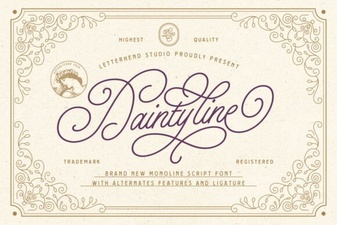 Daintyline Font: Elegant & Versatile Design Tool
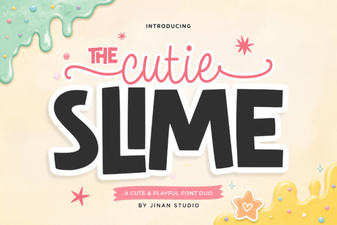 Cutie Slime Duo Font: Playful & Versatile Design
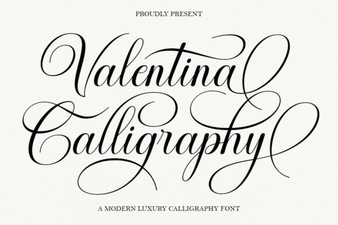 Valentina Calligraphy Font: Elegant Design & Creative Projects
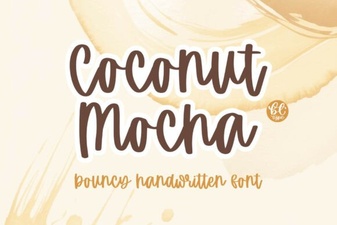 Coconut Mocha Font: a Bold, Tropical-Inspired Typeface
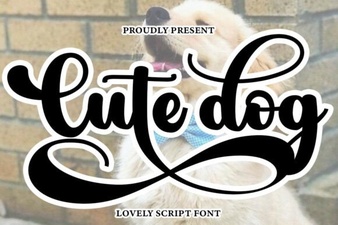 Cute Dog Font: Playful Typography for Design Projects
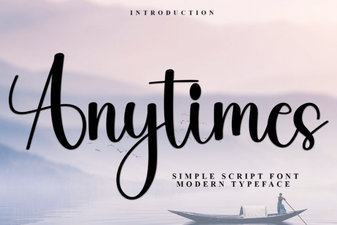 Anytimes Font: Creative & Versatile Design Tool